
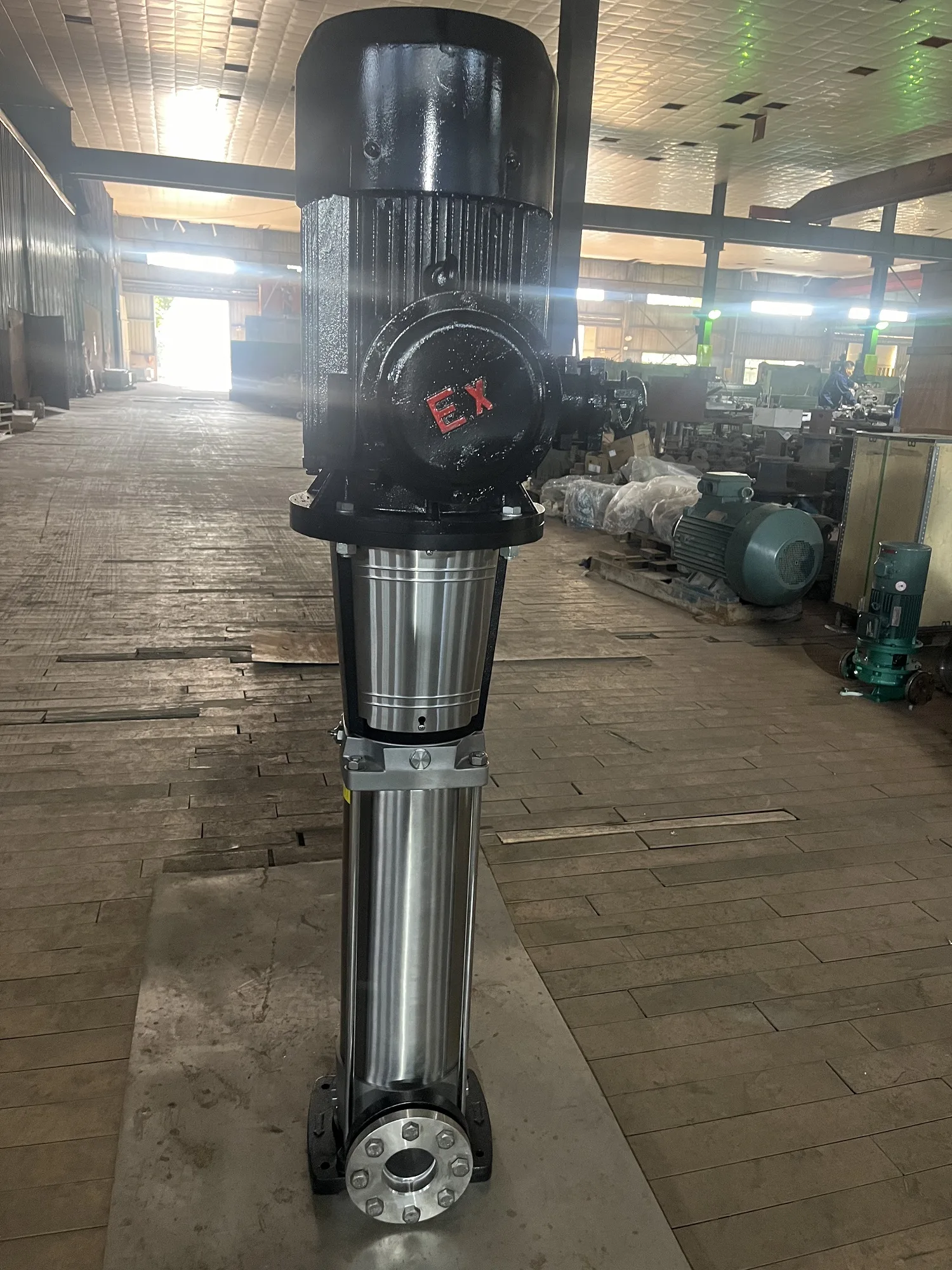
Vertical multistage centrifugal pumps typically use a vertical segmented structure made up of an inlet section, intermediate sections, discharge section and series of impellers. Liquid is pressurized stage by stage as impellers rotate: each impeller adds pressure, achieving high head. The design suits installation in compact pump rooms, equipment floors, machine rooms or packaged water-supply units, and pairs well with VFD controls, pressure tanks and non-negative-pressure supply equipment.
Main Structural Features
The motor is usually above the pump, with the pump shaft directly or via coupling connected to the motor shaft for a compact build. Inlet and outlet are often coaxial or near-coaxial for straightforward piping, reducing elbows and footprint. Tie rods hold the sections together; stages can be added or removed to meet head requirements within the same frame.
Shaft sealing commonly uses mechanical seals (low leakage, stable, long service intervals for continuous duty) or packing seals (lower cost but periodic adjustment). Wetted parts can be cast iron, stainless steel or duplex stainless steel depending on the medium — for clean water, softened/pure water, mildly corrosive liquids or hot-water circulation.
Performance and Applications
Typical advantages are high head, small size, smooth running and low noise. Compared with horizontal multistage pumps, the vertical build saves space in high-rise buildings, fire pump rooms, boiler rooms and water-treatment workshops. Compared with single-stage pumps, multistage construction delivers higher pressure for long-distance transfer, district water supply and high-pressure flushing.
These pumps suit clean, low-viscosity liquids free of solids or fibers. Choose stainless steel for chloride-containing mineral water or mild acid/alkali; for hot-water circulation or boiler feed, mind medium temperature, seal type, bearing cooling and material matching. Confirm fire certifications for fire-service use.
Typical Applications
Building water supply (secondary boosting in high-rise residences, hotels, hospitals): focus on flow stability, head matching and VFD control. Fire systems (hydrants, sprinklers, pressure maintenance): pressure reliability, start/stop response and certification. Industrial supply (boiler feed, cooling circulation, process make-up): medium temperature, material and continuous-duty capability. Water treatment (RO, UF, reclaimed-water boosting): corrosion resistance, seal reliability and pressure stability. HVAC (chilled/hot water circulation): noise, vibration and energy efficiency.
Selection Tips
First define flow, head, medium temperature and composition, installation and control method. Size flow for peak demand with margin; calculate head from vertical lift, piping friction, valve losses and required outlet pressure. For VFD constant-pressure supply, check efficiency at part load; for fire or critical process systems, prioritize reliability, spare-parts availability and service response.


