
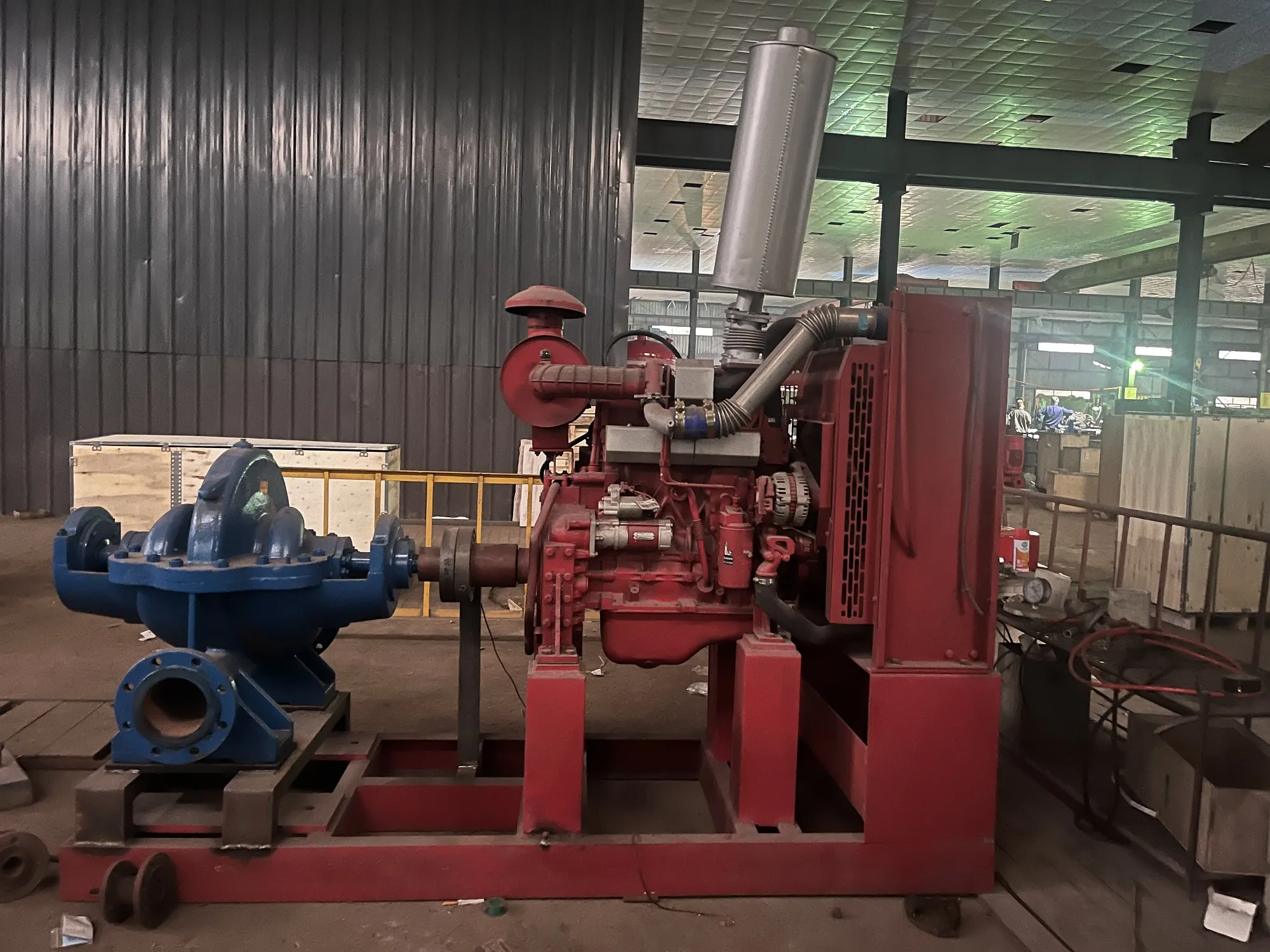
In modern fire-water systems, electric-motor-driven fire pumps are the main supply. But when a fire causes a power outage or line damage, electric pumps fail — and the diesel engine fire pump becomes the last critical barrier. Tonglian Pump’s diesel fire-pump sets strictly follow national fire-pump standards and are widely used in chemical parks, industrial and mining sites, high-rise buildings, warehouses, logistics centers and docks. With an independent power source and stable output, they deliver emergency fire-fighting water under complex conditions.
The core advantage is independence from the grid: even during a power outage or circuit damage, the diesel set starts and runs normally, avoiding supply interruption. The automatic control system supports pressure-signal linkage and fire-alarm start, plus local manual start. When pipe-network pressure drops below the set threshold, the control system starts the set, reaching rated flow and pressure in a short time to supply sprinklers and hydrants.
The set adapts to a wide range of duties: single-stage, double-suction or multistage pump ends can be selected to cover flow and head for most industrial and building fire-fighting needs. The integrated common base with elastic-coupling direct drive gives a compact structure, low vibration and easy installation. Monitoring modules display oil pressure, speed, battery voltage and coolant temperature in real time, with alarms for low oil pressure, high water temperature and overspeed.
Environmental adaptability is another highlight: optional diesel preheating improves cold-weather starting for northern outdoor pump rooms. The engine delivers strong torque and fast acceleration, with a governor that maintains stable speed under load. The set can work as the main or backup pump alongside electric pumps, or as a standalone unattended unit.
The Four Working Stages
1. Standby: the set is on standby in auto mode, battery charged, fuel and fluids at standard levels, pump and piping filled, monitoring network pressure.
2. Signal-triggered start: when a hydrant opens or sprinkler bursts, network pressure drops; the sensor signals the control panel to crank the diesel engine, which fires and runs on its own. Dual batteries provide starting redundancy.
3. Power transmission and pressurized supply: the engine drives the pump shaft through the elastic coupling; the impeller creates a vacuum, atmospheric pressure pushes water in, and the volute converts kinetic to pressure energy. The governor adjusts speed to maintain stable pressure. Per fire codes, the set will not auto-stop except for major faults such as overspeed; an operator must stop it manually to avoid mid-fire water loss.
4. Shut-down and reset: after the fire, the operator closes the outlet valve, reduces speed and stops the set; then the pump is drained and the control panel reset to standby.
Maintenance
Because diesel fire pumps spend most of their time on standby, most faults come from neglected maintenance. Daily inspection covers fuel, oil and coolant levels, battery terminals, leaks and loose joints; a short weekly no-load run prevents carbon buildup and dry seal sticking. Periodic maintenance by running hours includes changing oil and filters, inspecting the impeller, mechanical seal and coupling elements. In winter, use antifreeze and drain the pump to prevent freezing. For long storage, drain fuel and fluids, rust-protect metal parts, and charge/remove the battery. Never run the pump dry, keep a maintenance log, use qualified personnel and genuine spare parts, and do not alter factory governor/pressure settings.


