
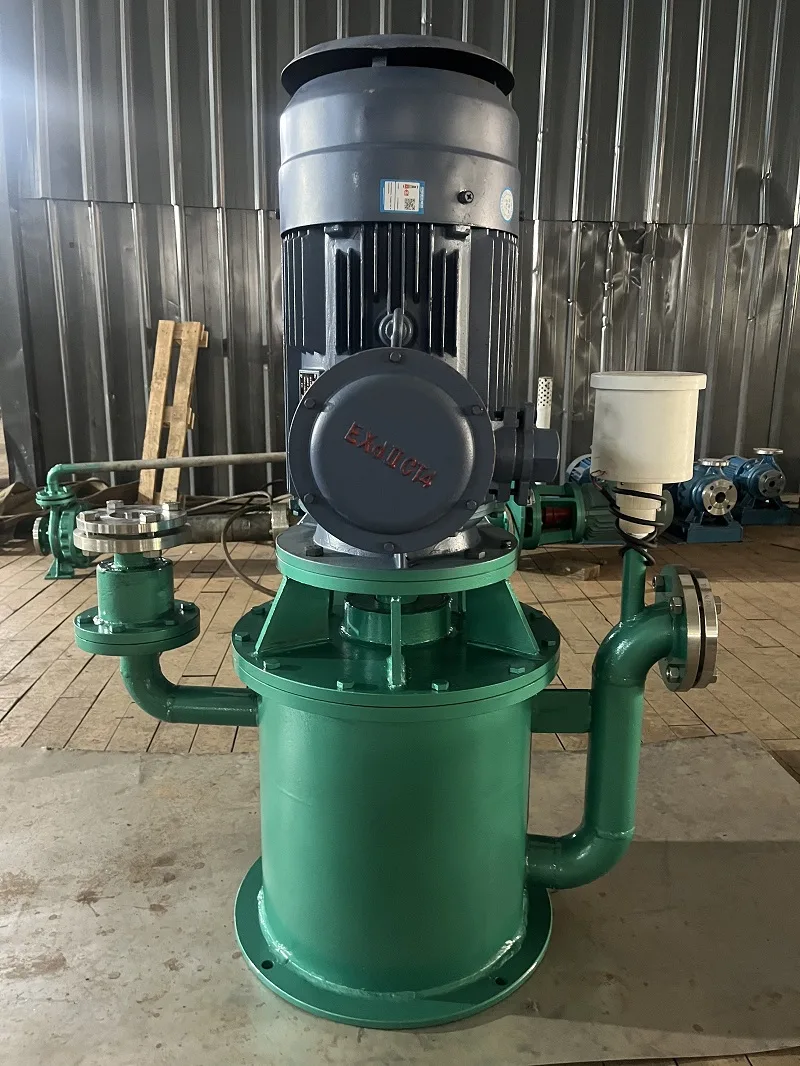
The WFB seal-less self-priming pump combines self-priming with a seal-free design. With no mechanical seal, no priming liquid on start-up, and corrosion/wear resistance, it is widely used in chemical, environmental-protection and water-treatment fields.
1. Pre-start Preparation: Check and Adjust
Confirm the medium (clean water, corrosive liquid, slightly slurry-containing) matches the pump material (cast iron for neutral media; stainless steel/fluoroplastic for acid/alkali). Ensure medium temperature does not exceed the rated value (usually ≤ 120°C).
Suction piping: use rigid pipe (avoid flexible hose collapse), keep length within self-priming range (usually 3–8 m), and fit a strainer (mesh ≤ 3 mm). Discharge piping: install a check valve and gate valve, seal all joints (air leaks cause loss of self-priming). Place the pump level on a solid foundation with anchor bolts.
Although self-priming, on first use or after long shutdown, fill the pump’s reservoir (top chamber) to the level sight glass so the impeller is initially immersed, shortening priming time. Open the vent valves, start the motor, then close them; confirm continuous liquid flows in the discharge pipe.
2. Operation: Stable and Controlled
On first start, jog the motor (1–2 s) to confirm impeller rotation matches the arrow; reverse rotation prevents self-priming. During the self-priming stage (30 s to 2 min), listen for dry-running noise, which indicates an air leak or blocked strainer.
Monitor flow and pressure via the gate valve; keep pressure within rated head (fluctuation ≤ 0.05 MPa). Listen for smooth running, feel the motor housing temperature (≤ 70°C), and watch the reservoir level.
For particle-laden media, keep particles within tolerance (usually ≤ 5 mm) and avoid frequent starts. For crystallizing media, flush with clean water before shutdown.
3. Shut-down and Maintenance
Close the discharge gate valve first, then cut power; after the motor stops, open the drain valve to empty residual medium (essential for corrosive media). Never run dry (the liquid-film seal requires liquid). After 3000 hours, inspect the impeller and bearings. Clean the reservoir regularly.
4. Common Problems
No self-priming: check for air leaks, low reservoir level, or reversed/worn impeller. Loud noise: check pump fixing, bearings or trapped air. Sudden flow drop: check a blocked strainer, jammed impeller or low motor voltage.


